Food, Inc. and Super Size Me
English film sequence for lycées agricoles · farming, livestock and food
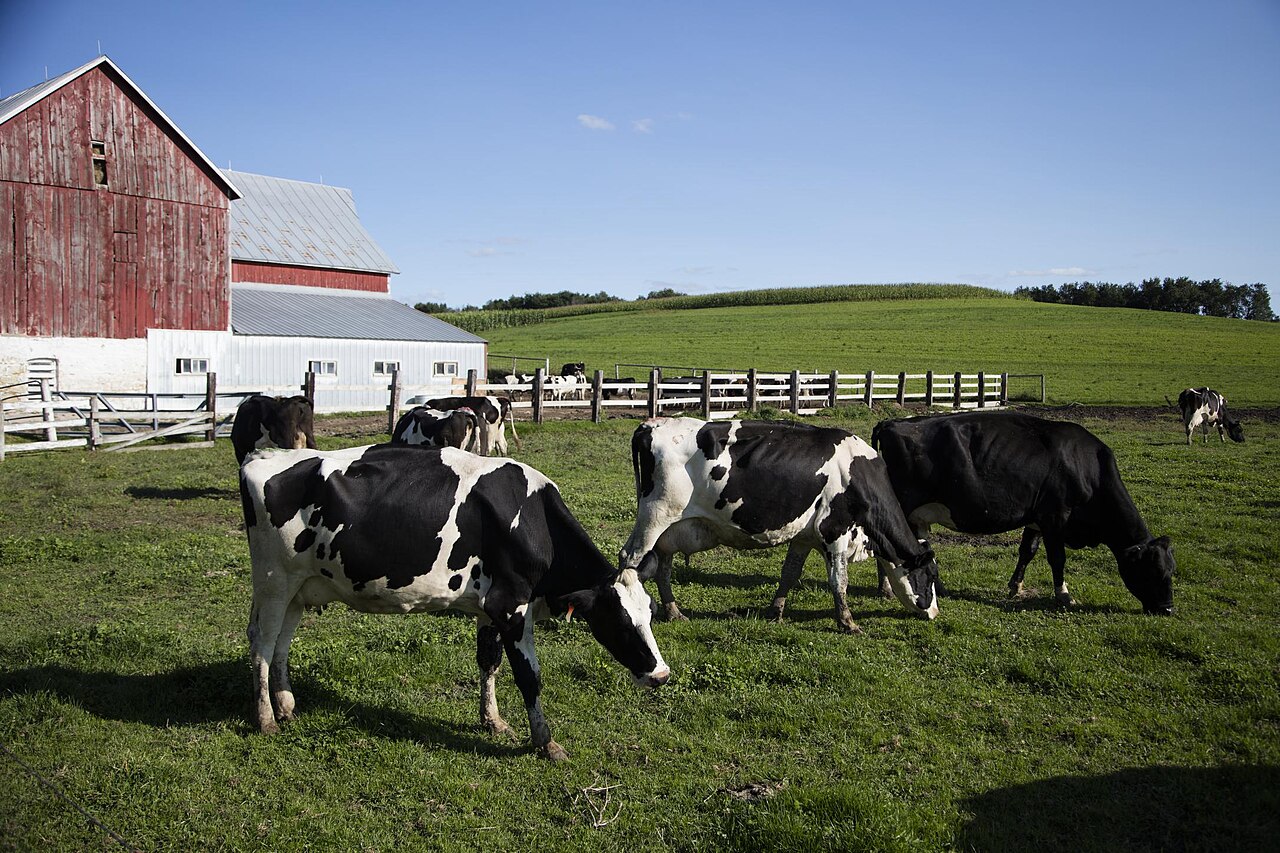
Holstein dairy cows on a family farm near Westby, Wisconsin, 2016 · Photo: Carol M. Highsmith · Public domain · Wikimedia Commons
Context · before you watch
Food, farms and two documentaries
Holstein dairy cows on a family farm near Westby, Wisconsin, 2016 Photo: Carol M. Highsmith · Public domain · Wikimedia Commons
The question
What does it take to feed people well and to look after the land and the animals?
Why these films for you?
You are training to work on a farm, with animals, in the fields or in food production. Two American documentaries look at food from two ends. Food, Inc. starts on the farm: chicken houses, corn fields, a pasture farm in Virginia. Super Size Me starts on the plate: thirty days of fast food. Between the two, there are farmers. We listen to them.
Food, Inc. · official trailer
Video: Food, Inc., official trailer, Magnolia Pictures & Magnet Releasing · open on YouTube
Super Size Me · official trailer
Video: Super Size Me, official trailer, DocPlay · open on YouTube
The era, the directors, the world
The era
The early 2000s in the United States. Fast food chains are everywhere; a few large companies buy most of the chickens, pigs, beef and potatoes. In 2004 Super Size Me comes out; in 2008 Food, Inc. follows.
The directors
Morgan Spurlock (1970 to 2024) films himself eating only McDonald’s food for thirty days in 2003. Robert Kenner makes Food, Inc. with the writers Eric Schlosser and Michael Pollan.
The world they show
Contract chicken growers, feedlots, corn and soybean fields, potato harvests, a supermarket with tens of thousands of products, and Polyface Farm, where animals move across the grass.
Key dates
- 1906Upton Sinclair’s novel The Jungle shows Chicago meatpacking; the first federal food safety laws follow.
- 2001Eric Schlosser publishes Fast Food Nation.
- 2004Super Size Me wins the documentary directing award at the Sundance Film Festival.
- 2008Food, Inc. is first shown at the Toronto International Film Festival; it is released in 2009 and nominated for an Academy Award.
- 2011The Food Safety Modernization Act is signed in the United States.
Partie enseignant · en français
Guide de l’enseignant
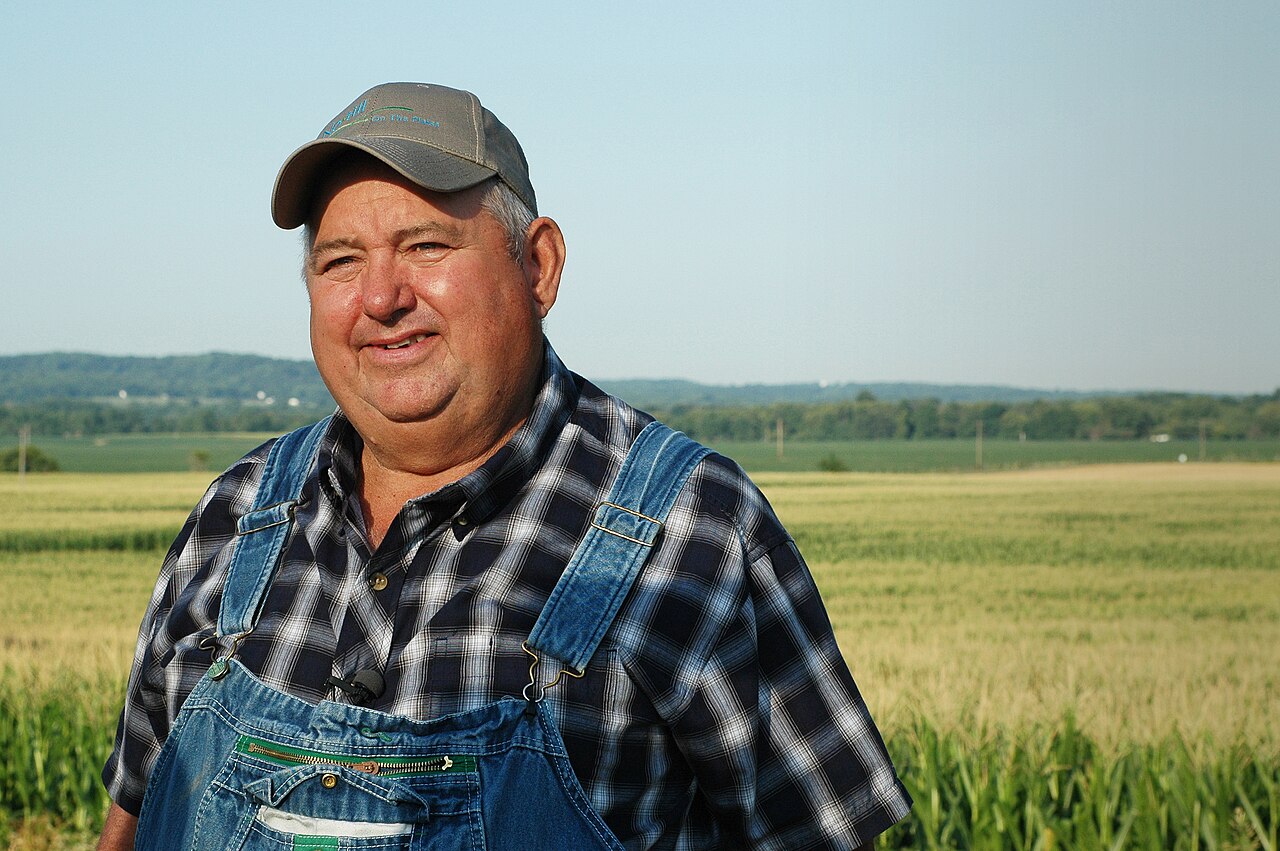
David Brandt, an Ohio farmer known for caring for his soil, 2012 Photo: U.S. Department of Agriculture · Public domain · Wikimedia Commons
Pour les lycées agricoles. Séquence d’anglais pour le bac pro agricole (toutes spécialités), adaptable en CAPa. Elle croise deux documentaires américains, Food, Inc. (Robert Kenner, 2008) et Super Size Me (Morgan Spurlock, 2004), en adoptant le point de vue des producteurs : élevage, cultures, production alimentaire, agriculture durable. On parle des métiers et des personnes filmées, jamais de la vie privée des élèves.
Déroulé conseillé (8 séances)
- Contexte et question directrice ; lexique « from field to plate ».
- Food, Inc. : bande-annonce officielle, trois écoutes ; fiche élève.
- Les éleveurs du film : l’élevage de poulets sous contrat, Polyface Farm (onglet Farm voices).
- Super Size Me : bande-annonce, fiche élève ; la pomme de terre, du champ à la frite.
- Point de langue : la voix passive pour décrire une filière.
- Débat « Two farms, two ways » avec débuts de phrases.
- Préparation de l’oral (présentation d’une exploitation ou d’un stage).
- Évaluation sommative au format E3.3 (capacité C3.3).
Les deux études complètes, avec leur fiche imprimable, existent aussi sur SequencePro : Food, Inc. et Super Size Me.
Les trois piliers de la séquence
Étude de la langue
The passive voice: describing a food chain. Règle, exemples tirés de l’œuvre, exercice et corrigé : onglet Grammar.
Lexique
From field to plate: farming trades and food production : mots illustrés, exemples en contexte, réemploi et corrigé : onglet Lexicon.
Évaluation sommative
Évaluation sommative au format E3.3 de l’enseignement agricole (capacité C3.3, note DGER/SDPFE/2026-58) : onglet Assessment, grilles officielles, barème et corrigé.
Corrigé de la fiche élève (réponses modèles en anglais)
Food, Inc. 1 A 2008 documentary by Robert Kenner, with Eric Schlosser and Michael Pollan, about the industrial food system. 2 About 47,000 products. 3 In 49 days. 4 She raises chickens owned by a large company, in her own buildings; the company sets the rules. 5 The animals live on grass and are moved to new pasture; meat is sold locally. 6 Open answer.
Super Size Me. 1 He eats only McDonald’s food for thirty days and films the effects. 2 “Unfortunately, you caused some major harm to your heart, your liver, your blood.” 3 From states like Idaho; harvested, sorted, then processed into frozen fries. 4 Large volumes, a steady quality and size, low prices. 5 Open answer.
Farm voices
The farmer’s viewpoint
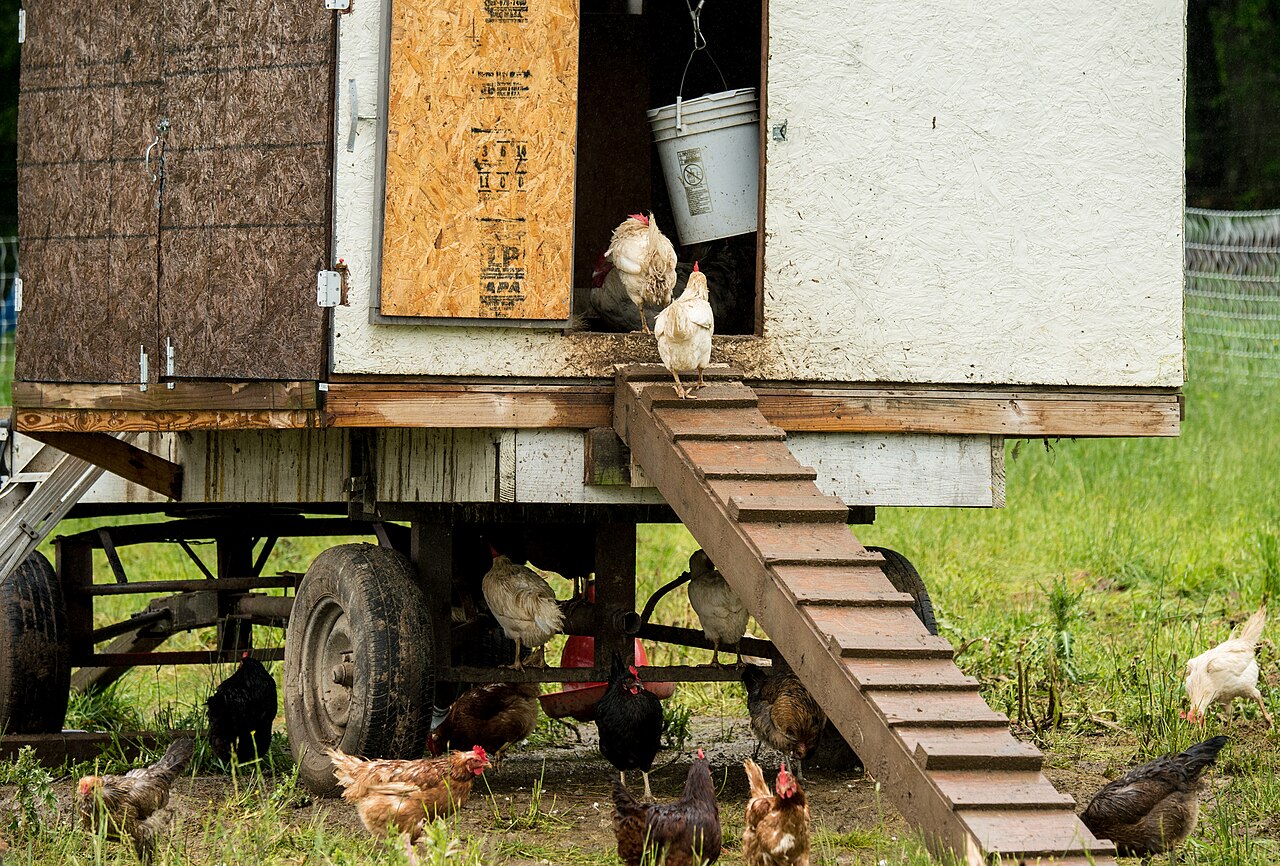
A mobile shelter lets chickens move across the pasture, Hock Newberry Farm, 2016 Photo: U.S. Department of Agriculture · Public domain · Wikimedia Commons
Behind every plate there is a farm. Look at each photo, read the text, then speak about it with the sentence starters.
Moving the animals across the pasture
On pasture farms like Polyface Farm in Virginia, shown in Food, Inc., the farmer moves the chickens and the cows to fresh grass. The animals fertilise the soil, and the grass grows back.
Speak with…
- « On this farm, the animals… »
- « The farmer moves… because… »
Growing chickens under contract
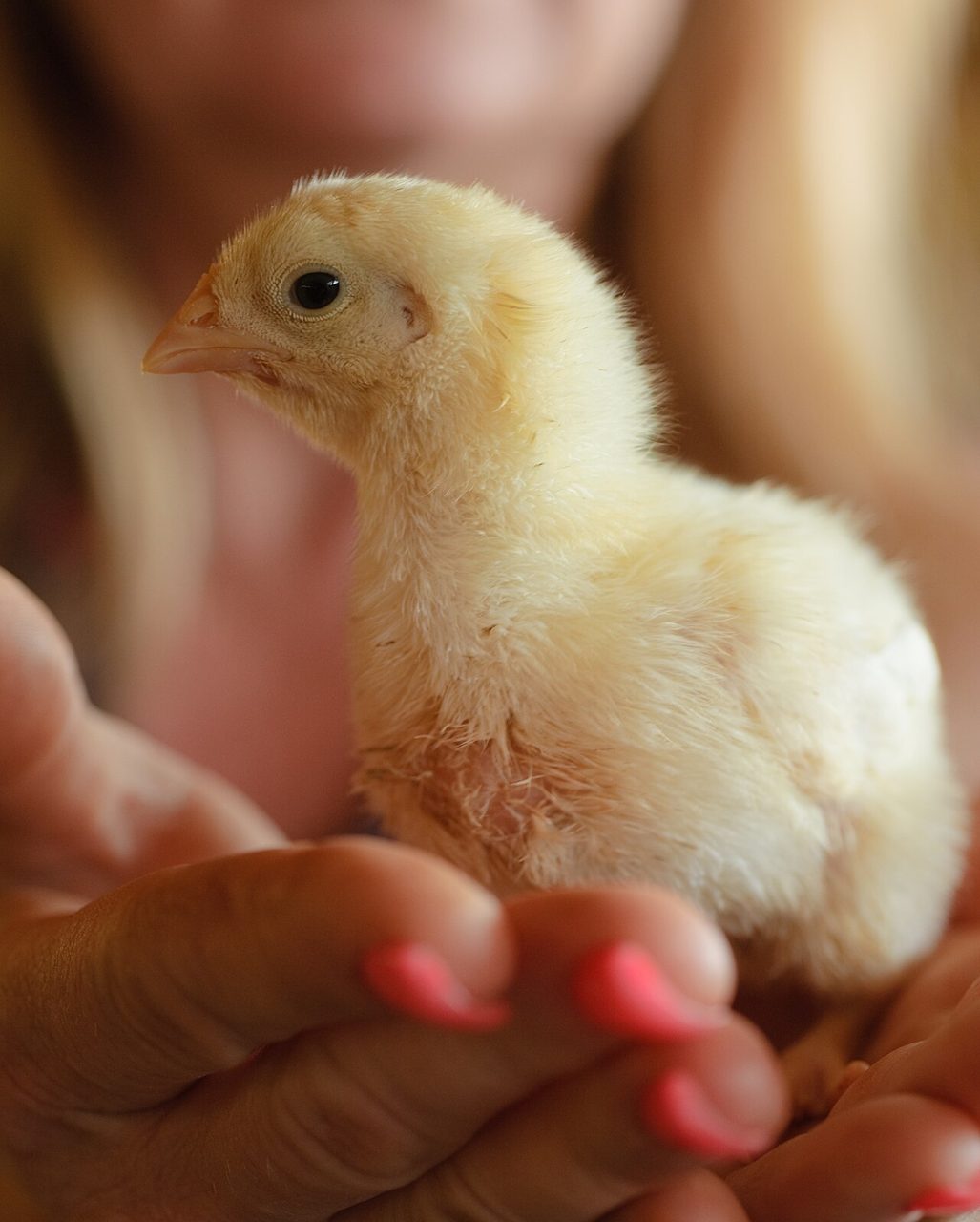
In Food, Inc., Carole Morison grows chickens for a large company. The company owns the birds and decides how they are raised; the farmer owns the buildings and the debt.
Speak with…
- « A contract grower… »
- « The company decides…, but the farmer… »
From the potato field to the fries
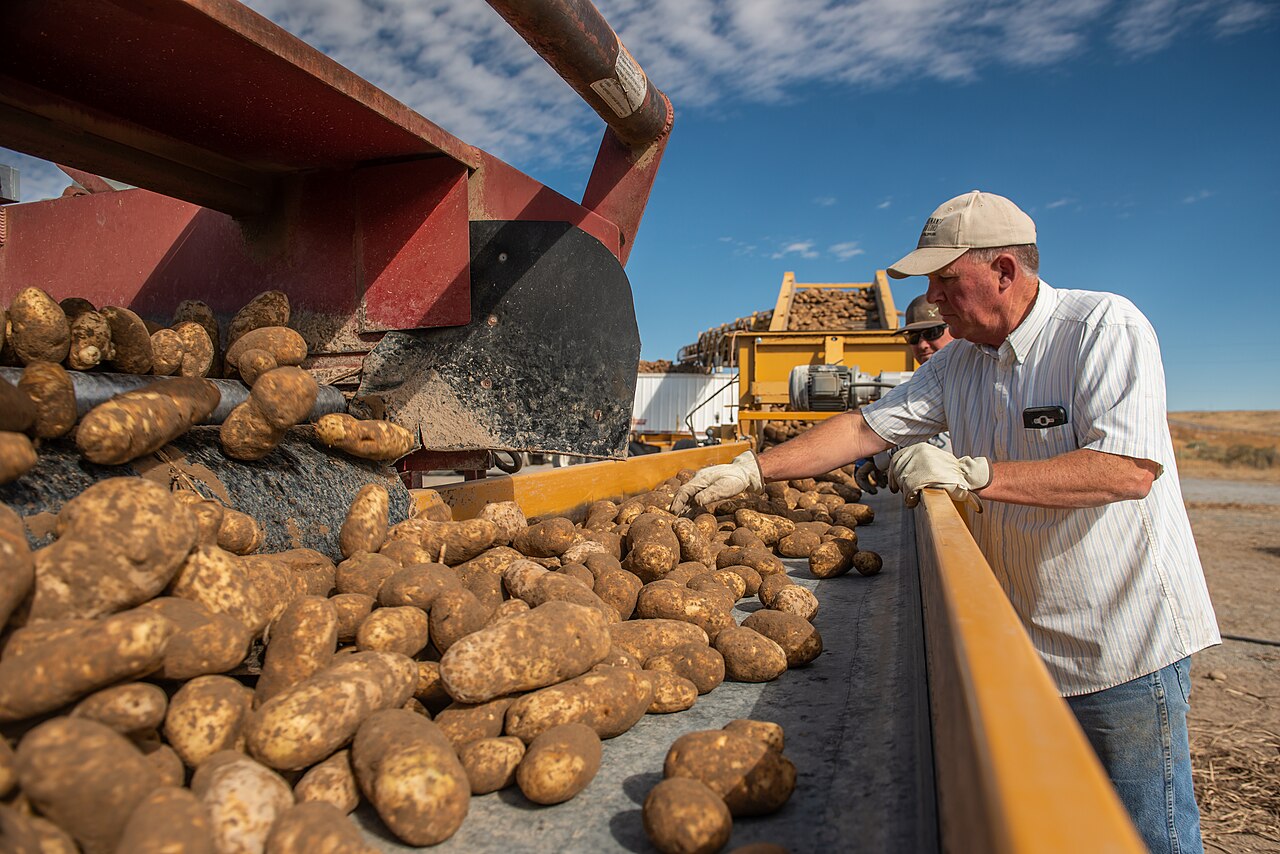
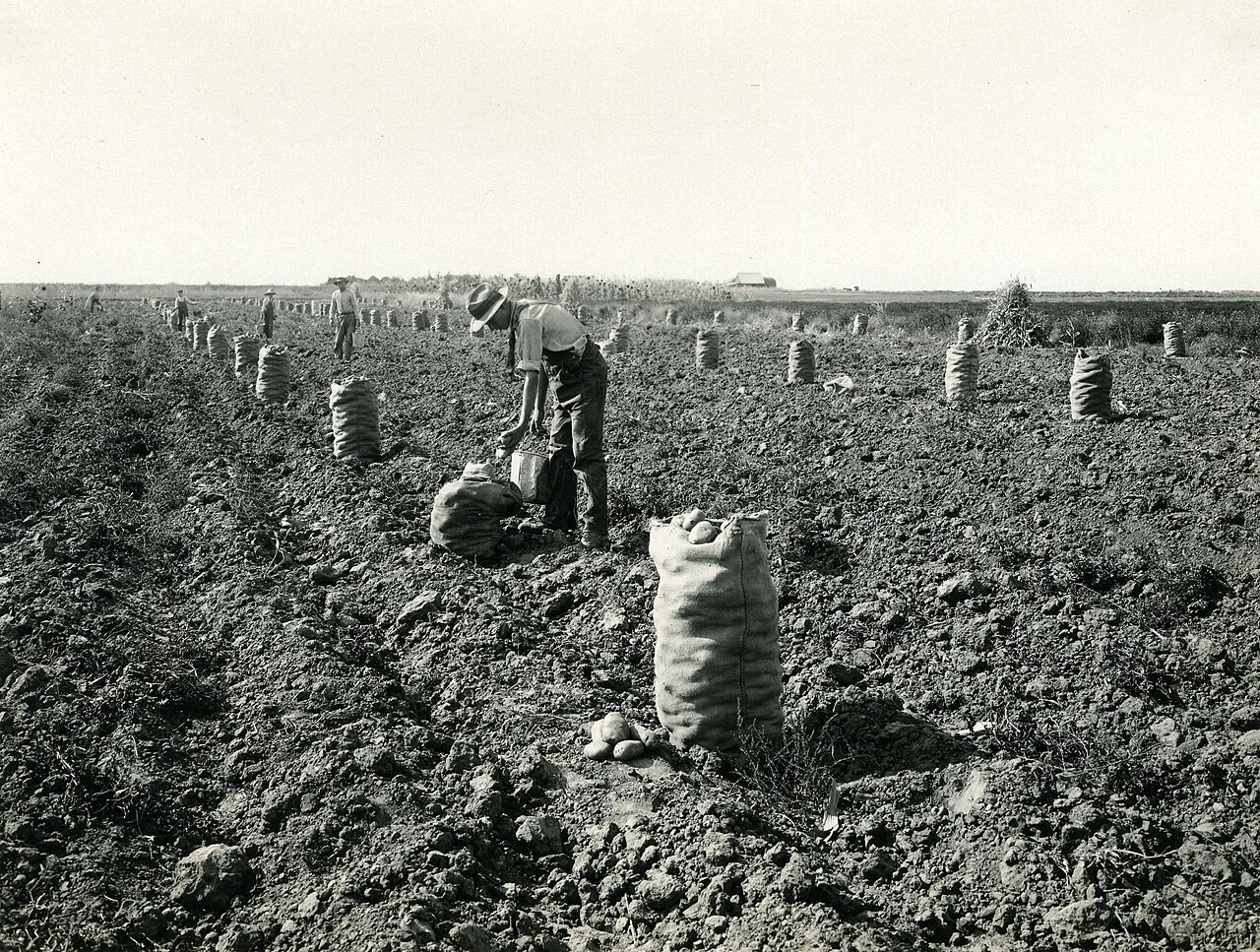
Potatoes are harvested and sorted in Idaho, one of the main potato states. Many of them become frozen fries for fast food restaurants, the food of Super Size Me.
Speak with…
- « The potatoes are… »
- « Then they are… »
Looking after the soil
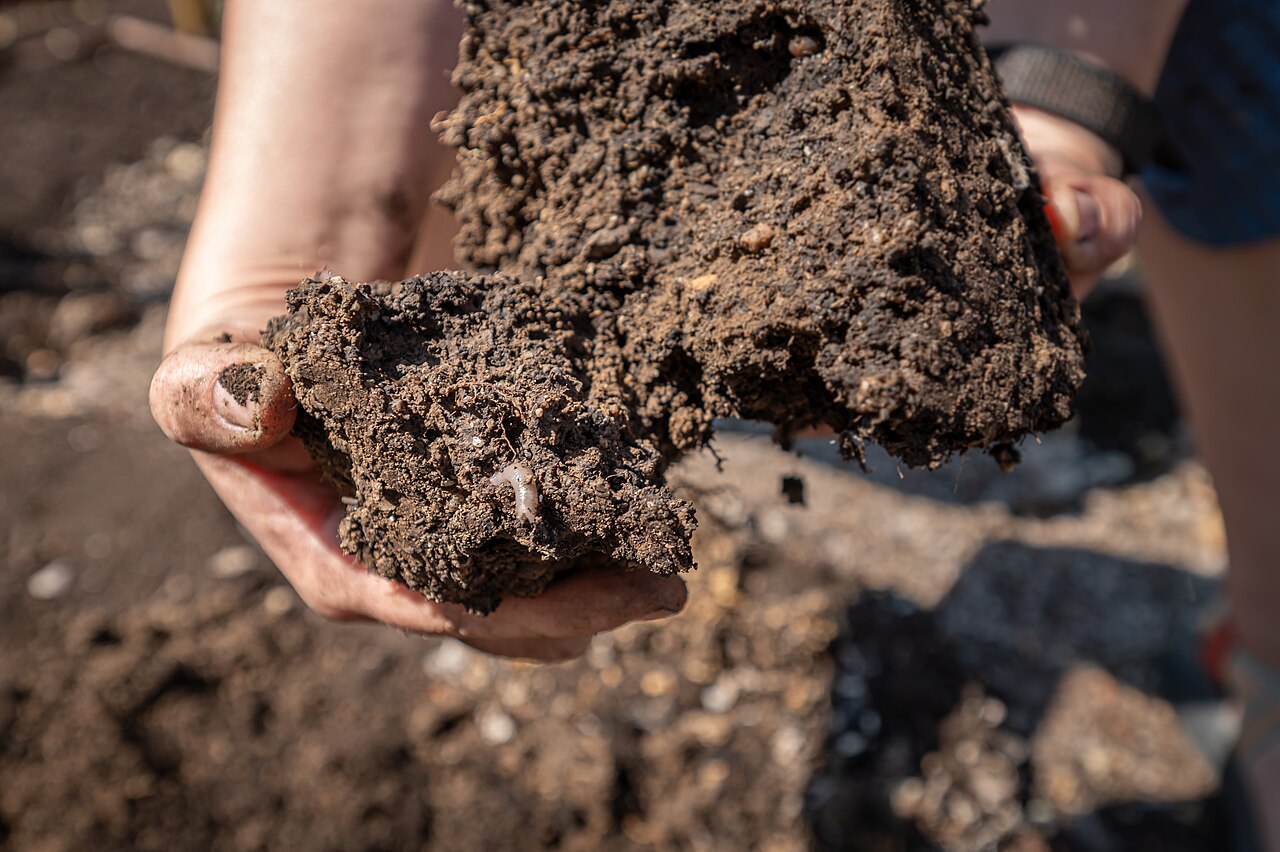
Healthy soil is full of life: worms, roots, organic matter. Farmers who protect their soil plant cover crops and avoid leaving the ground bare.
Speak with…
- « Healthy soil is… »
- « To protect the soil, farmers… »
Class debate
Two farms, two ways. Group A defends the contract chicken farm (steady orders, cheap food for many families); group B defends the pasture farm (animal welfare, healthy soil, local sales). Each group prepares three arguments, then the class votes.
Speak with…
- « I think that… because… »
- « I agree with… but… »
- « On the other hand,… »
- « In the film, we see that… »
Student’s worksheet
Food, Inc.
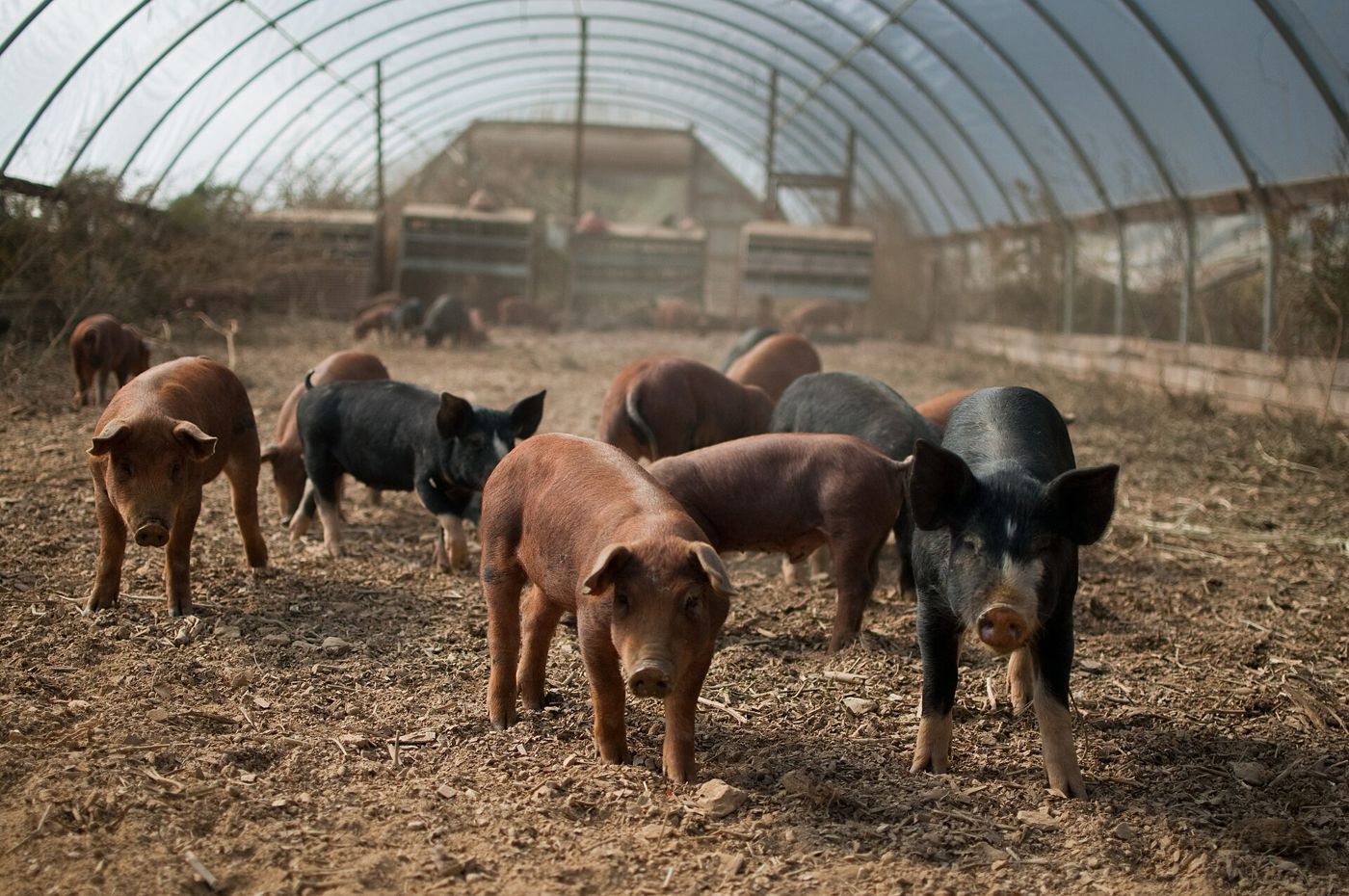
Pigs at Polyface Farm, Virginia, featured in the film Photo: Brian Johnson & Dane Kantner · CC BY-SA 2.0

Talk and write about the people in the film, never about your own private life.
1 What is Food, Inc. about? Who made it?
Start with…
- « Food, Inc. is a documentary by… about… »
2 Listen to the trailer: how many products does a modern supermarket have on average?
Start with…
- « A modern supermarket has… »
3 How many days does it take to grow a chicken today, according to the trailer?
Start with…
- « Today a chicken can be grown in… »
4 The farmer’s viewpoint: describe the work of a contract chicken grower.
Start with…
- « A contract grower raises… for… »
- « The company… »
5 What is different at Polyface Farm?
Start with…
- « At Polyface Farm, the animals… »
- « The farmer… »
6 Your opinion (100 to 120 words): which farm would you like to work on, and why?
Start with…
- « I would like to work on… because… »
- « First,… Moreover,… »
- « However,… »
- « That is why… »
Student’s worksheet
Super Size Me
Potatoes are sorted at harvest near Declo, Idaho, October 2018 Photo: U.S. Department of Agriculture · Public domain · Wikimedia Commons
Talk and write about the people in the film, never about your own private life.
1 What does Morgan Spurlock do in Super Size Me?
Start with…
- « For thirty days, Morgan Spurlock… »
2 Listen to the trailer: what does the doctor say about his body?
Start with…
- « The doctor says that he has harmed his… »
3 Where do the potatoes for fries come from? Look at the photos.
Start with…
- « Many potatoes are grown in… »
- « They are harvested and… »
4 The farmer’s viewpoint: what does a potato farmer or a cattle rancher need to sell to fast food chains?
Start with…
- « A farmer needs… »
- « The chains want… »
5 Your opinion (100 to 120 words): can farmers help people eat better?
Start with…
- « In my opinion, farmers can… because… »
- « For example,… »
- « On the other hand,… »
- « To conclude,… »
Language study
The passive voice: describing a food chain
Harvesting potatoes by hand in the Boise Valley, Idaho, around 1920 Photo: waterarchives.org · Public domain · Wikimedia Commons
To describe what happens to food from the field to the plate, we often do not say who does the action. We use the passive voice: be + past participle.
Present passive
Potatoes are harvested in October. The chickens are raised in large houses.
Past passive
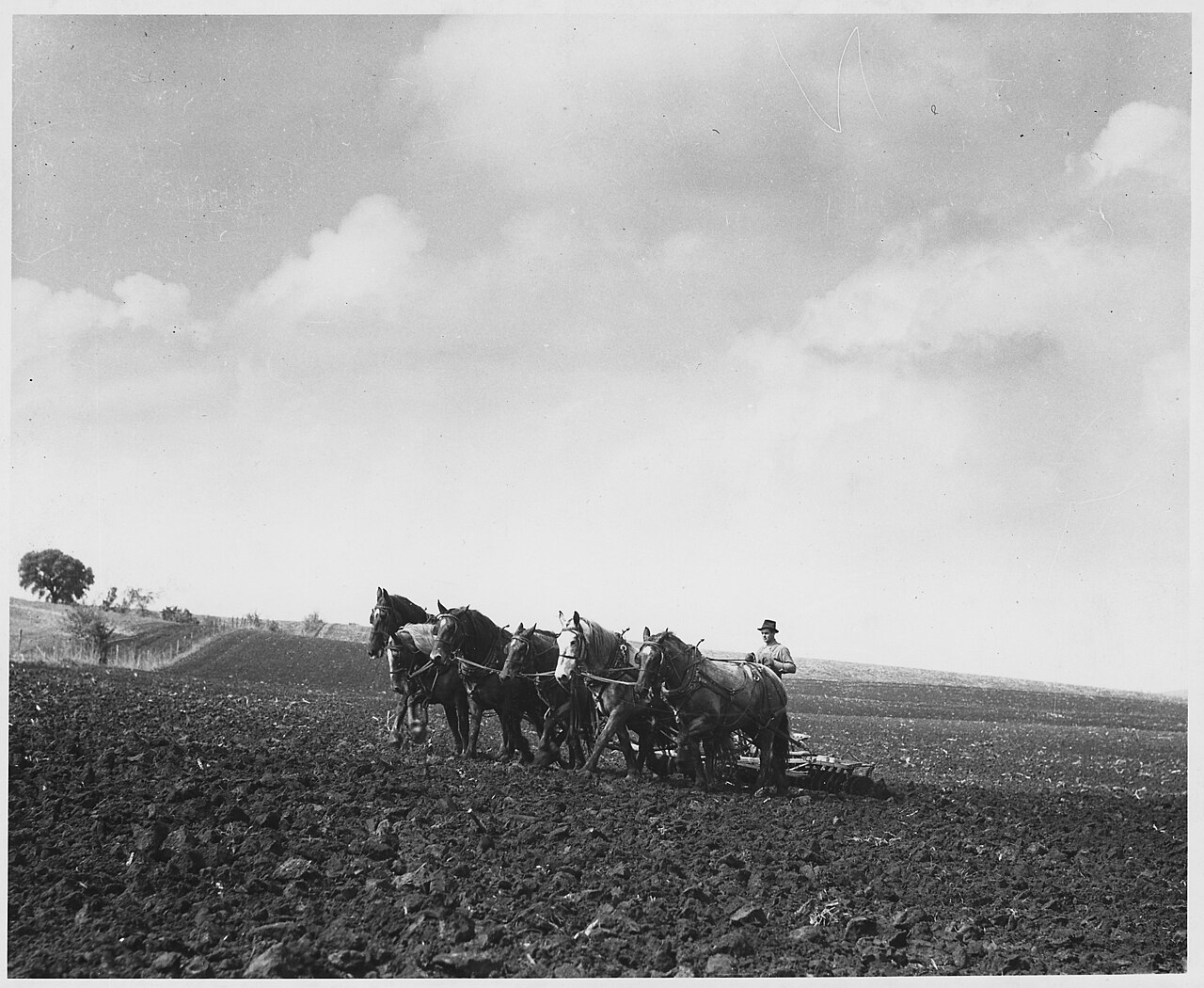
The film was made in 2008. The fields were harrowed with horses in 1941.
by + agent
When the agent is important: The birds are owned by the company.
Examples from the work
- Potatoes are sorted at harvest near Declo, Idaho.
- The chickens are owned by the company, not by the farmer.
- Cows are moved to fresh grass every day at Polyface Farm.
- Food, Inc. was nominated for an Academy Award.
Exercise
Complete with the correct form.
a The potatoes ______ (wash) and ______ (cut) into fries.
b Most of the corn ______ (feed) to animals.
c Super Size Me ______ (release) in 2004.
d The cows ______ (milk) twice a day.
e The land ______ (harrow) with horses in 1941.
f The chickens ______ (own) by the company.
Your turn
Describe a product of your farm or training (milk, wheat, apples, eggs…) in five passive sentences, from the field to the shop.
Answer key
a are washed, are cut · b is fed · c was released · d are milked · e was harrowed · f are owned
Lexicon
From field to plate: farming trades and food production
Holstein dairy cows on a family farm near Westby, Wisconsin, 2016 Photo: Carol M. Highsmith · Public domain · Wikimedia Commons
to harvest
to pick or collect a crop
Potatoes are harvested in the autumn.
Potatoes are sorted at harvest near Declo, Idaho, October 2018 · Photo: U.S. Department of Agriculture · Public domain · Wikimedia Commons
livestock
farm animals such as cows, pigs and chickens
The rancher looks after his livestock.
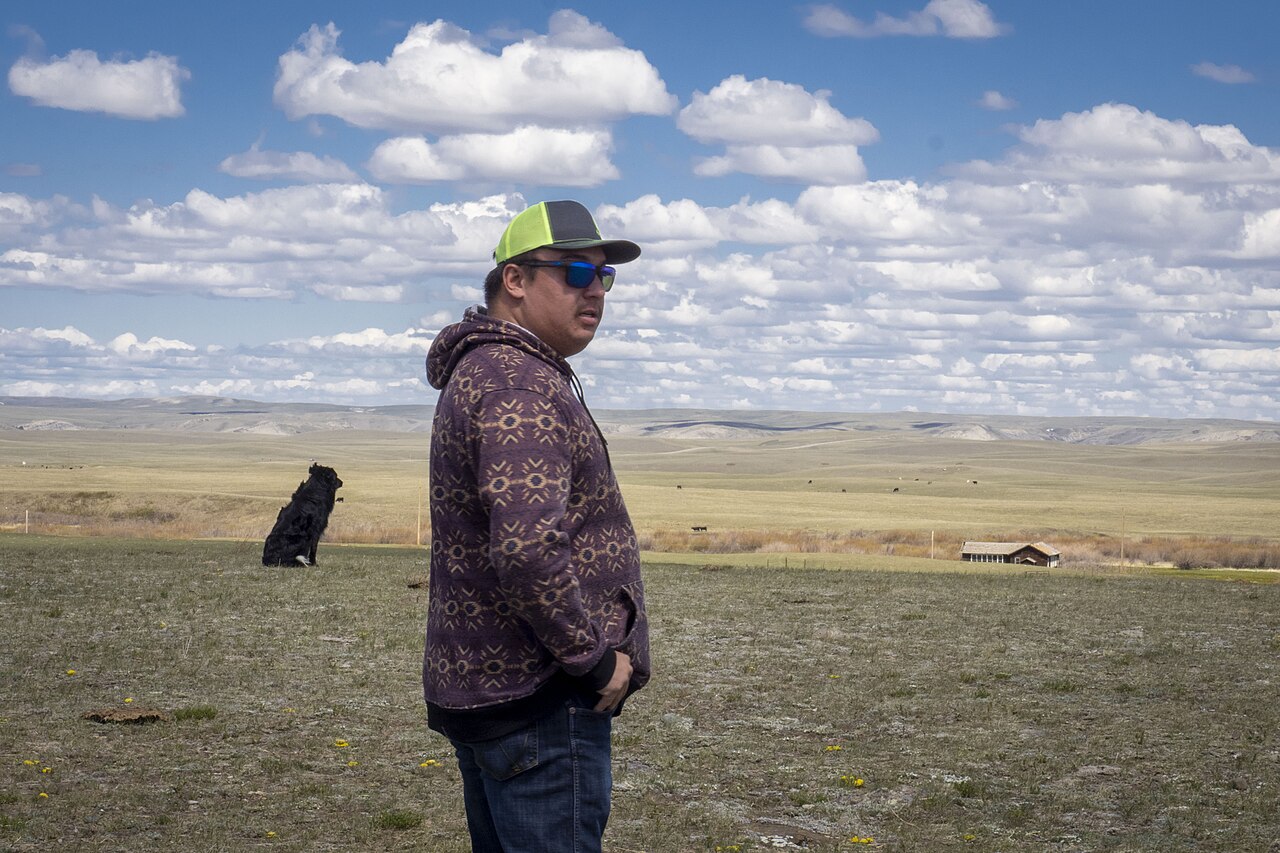
A Montana cattle ranch during a drought, May 2022 · Photo: U.S. Department of Agriculture · Public domain · Wikimedia Commons
a dairy farm
a farm that produces milk
This dairy farm in Wisconsin has Holstein cows.
Holstein dairy cows on a family farm near Westby, Wisconsin, 2016 · Photo: Carol M. Highsmith · Public domain · Wikimedia Commons
pasture
land covered with grass for animals
The chickens move across the pasture.
A mobile shelter lets chickens move across the pasture, Hock Newberry Farm, 2016 · Photo: U.S. Department of Agriculture · Public domain · Wikimedia Commons
soil
the top layer of earth where plants grow
Worms keep the soil healthy.
Healthy soil: a clump of earth with a worm, 2024 · Photo: U.S. Department of Agriculture · Public domain · Wikimedia Commons
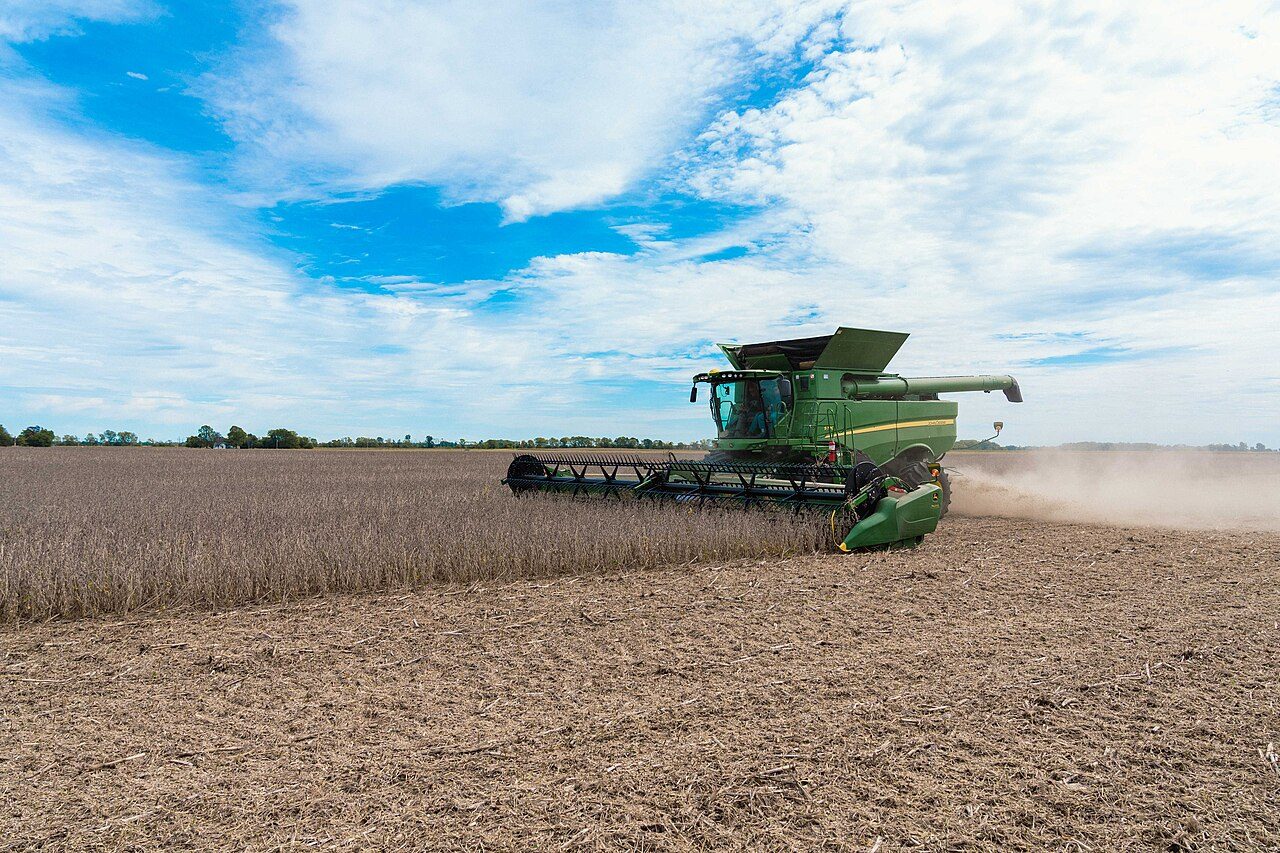
a crop
a plant grown for food, like corn or soybeans
Soybeans are an important crop in Indiana.
Harvesting soybeans in Indiana, 2022 · Photo: USDAgov · Public domain · Wikimedia Commons
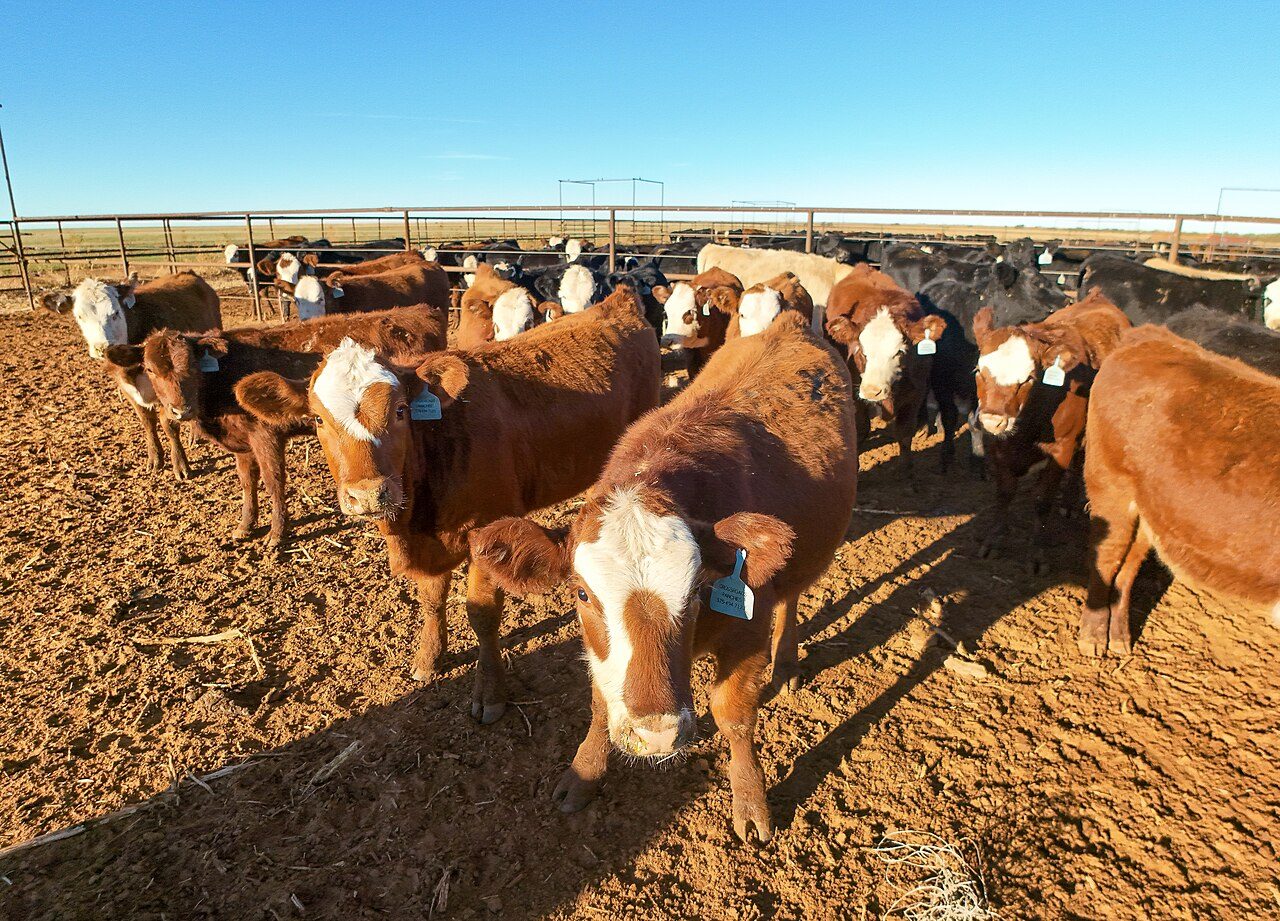
a feedlot
a place where cattle are fattened with grain
The film shows cattle in a feedlot.
Beef cattle in a feedlot, New Mexico · Photo: Quintin Soloviev · CC0 · Wikimedia Commons
to harrow
to break up the soil before sowing
In 1941 this farmer harrowed with horses.
Harrowing the land with horses, Shelby County, Iowa, 1941 · Photo: Irving Rusinow · Public domain · Wikimedia Commons
Reuse the words
Complete with a word from the lexicon.
1 Cows, pigs and chickens are called ______.
2 The farmer moves the cows to fresh ______.
3 Worms and roots make the ______ healthy.
4 In October, we ______ the potatoes.
5 A farm that produces milk is a ______.
Answer key
livestock · pasture · soil · harvest · dairy farm
Summative assessment
Summative assessment · E3.3 format (C3.3, agricultural bac pro)
A Montana cattle ranch during a drought, May 2022 Photo: U.S. Department of Agriculture · Public domain · Wikimedia Commons


Format officiel · bac pro agricole
Capacité C3.3 « Communiquer avec le monde » (épreuve E3, ECCF E3.3, coefficient 1), niveau B1+ du CECRL, note de service DGER/SDPFE/2026-58. Deux situations indépendantes, en dernière année de formation :
- Situation A, écrite, 1 h 30 au plus : compréhension de l’oral (enregistrement inconnu de 1 min 30 au plus, trois écoutes espacées d’une minute au plus, compte rendu en français), compréhension de l’écrit (texte authentique de 15 lignes au plus, compte rendu en français), expression écrite (100 mots au moins, consigne en français, sujets au choix possibles).
- Situation B, orale individuelle, 10 min : 5 min d’expression en continu sur un sujet choisi (thématiques de la classe, stage, projet, mobilité), puis 5 min d’interaction.
- Pondération : expression orale 40 %, compréhension de l’oral 30 %, compréhension de l’écrit 20 %, expression écrite 10 %. Note finale sur 200 ramenée sur 20.
Le sujet ci-dessous s’entraîne sur ce format ; la maîtrise du français n’est jamais évaluée dans les comptes rendus.
Situation A · Part 1 · Listening
Document: Official trailer of Food, Inc., from 0:00 to 1:25 (1 min 25). Title given: « Food, Inc.: official trailer ». Three listenings, one minute between them. You can take notes.
Consigne (en français, comme à l’examen). Rendez compte en français de ce que vous avez compris. Vous pouvez vous aider des repères suivants :
- la nature du document et son thème principal
- les chiffres entendus (50 ans, 10 000 ans, 47 000 produits, 49 jours)
- les personnes qui parlent et ce qu’elles dénoncent
- le point de vue des réalisateurs et la fonction du document (informer, dénoncer, convaincre)
Situation A · Part 2 · Reading
Polyface Farm
Polyface Farm is a farm located in rural Swoope, Virginia, run by Joel Salatin and his family. The farm is driven using unconventional methods with the goal of "emotionally, economically and environmentally enhancing agriculture". This farm is where Salatin developed and put into practice many of his most significant agricultural methods. These include direct marketing of meats and produce to consumers, pastured-poultry, grass-fed beef and the rotation method which makes his farm more like an ecological system than conventional farming. Polyface Farm operates a farm store on-site where consumers go to pick up their products.
Source : Wikipedia, « Polyface Farm », introduction (CC BY-SA 4.0), consulté en octobre 2026.
Consigne (en français, comme à l’examen). Rendez compte en français du document. Repères :
- la nature du document, le lieu et les personnes
- les méthodes de la ferme (au moins trois)
- le but de l’agriculteur
- la relation avec les consommateurs
Situation A · Part 3 · Writing
Choose one subject. Write at least 100 words.
Consigne en français (note DGER 2026-58). Choisissez un des deux sujets. Situation : vous écrivez en anglais à la personne indiquée ; rédigez au moins 100 mots.
1 Everyday life. Votre correspondant anglais vous demande quel film il devrait regarder sur l’alimentation. Écrivez-lui un courriel pour lui conseiller Food, Inc. ou Super Size Me, et dites pourquoi.
Start with…
- « In my opinion,… because… »
- « First,… Then,… Finally,… »
- « However,… »
- « That is why I think… »
2 Professional life. Vous faites un stage dans une exploitation. Un visiteur anglais vous demande comment les animaux ou les cultures y sont gérés. Rédigez une courte présentation de l’exploitation.
Start with…
- « In my opinion,… because… »
- « First,… Then,… Finally,… »
- « However,… »
- « That is why I think… »
Situation B · Speaking (10 minutes)
Part 1, speaking alone (5 minutes). Choose one subject. You can bring a photo and a plan with keywords, but you cannot read a text.
- Present a farm you know from your training or your work placement: animals or crops, the work, the products, how the soil and the animals are looked after.
- Present one of the two films and say what a farmer could learn from it.
Speak with…
- « Today I am going to present… »
- « First,… Then,… Finally,… »
- « What I learnt is that… »
- « In my opinion,… »
Part 2, conversation with the examiner (5 minutes). Possible questions:
- Would you rather work on a big farm or a small farm? Why?
- What do you do to look after animals or soil in your training?
- Who should decide what grows on our farms?
- What food would you like to produce one day?
Answer with…
- « That’s a good question. I think… »
- « I agree, but… »
- « For example, in the film… »
- « Could you repeat, please? »
Grilles officielles
Grille de synthèse de la capacité C3.3 (annexe 9 de la note DGER/SDPFE/2026-58). Chaque activité est d’abord notée sur 20 à l’aide d’une grille critériée, puis pondérée.
| Activité langagière | <A1 | A1 | A2 | B1 | B1+ | Coefficient | Note |
|---|---|---|---|---|---|---|---|
| Expression orale (en continu et en interaction) · situation B | 0 à 3 | 4 à 7 | 8 à 11 | 12 à 15 | 16 à 20 | × 4 | … / 80 |
| Compréhension d’un document audio · compte rendu écrit | 0 à 3 | 4 à 7 | 8 à 11 | 12 à 15 | 16 à 20 | × 3 | … / 60 |
| Compréhension d’un document écrit | 0 à 3 | 4 à 7 | 8 à 11 | 12 à 15 | 16 à 20 | × 2 | … / 40 |
| Expression écrite | 0 à 3 | 4 à 7 | 8 à 11 | 12 à 15 | 16 à 20 | × 1 | … / 20 |
| Total … / 200, ramené sur 20 en divisant par 10 (arrondi au point supérieur à partir de 0,50). Niveau CECRL global : <A1 de 1 à 3 · A1 de 4 à 7 · A2 de 8 à 11 · B1 de 12 à 15 · B1+ de 16 à 20. Pour chaque activité, l’évaluateur situe d’abord la prestation sur une grille critériée (exemples dans le document d’accompagnement du module MG3). | |||||||
Barème
Expression orale (continu et interaction) /20 × 4 ; compréhension de l’oral /20 × 3 ; compréhension de l’écrit /20 × 2 ; expression écrite /20 × 1 ; total /200 ramené sur 20.
Corrigé
Compréhension de l’oral : éléments attendus
Bande-annonce d’un documentaire américain sur l’industrie alimentaire. Notre façon de manger a plus changé en 50 ans qu’en 10 000 ans ; un supermarché propose en moyenne 47 000 produits ; l’industrie ne veut pas que l’on sache ce que l’on mange ; l’agriculture moderne cherche à produire plus vite, plus gros, moins cher (un poulet en 49 jours au lieu de trois mois) ; la diversité du supermarché est une illusion, beaucoup de produits viennent du maïs ; contaminations (salmonelle, E. coli) ; le consommateur « vote » à chaque achat. Fonction : dénoncer et convaincre.
QCM CAP : 1 a · 2 c · 3 b · 4 a · 5 b · 6 b
Compréhension de l’écrit : éléments attendus
Extrait d’encyclopédie en ligne présentant une ferme familiale de Virginie (Swoope), tenue par Joel Salatin et sa famille. Méthodes non conventionnelles : vente directe de viande et de légumes, volailles élevées au pré, bœuf nourri à l’herbe, rotation des pâturages ; la ferme ressemble à un écosystème. But : améliorer l’agriculture sur le plan humain, économique et environnemental. Magasin à la ferme où les clients viennent chercher leurs produits.
Expression écrite et orale : attendus
Production en anglais qui traite le sujet choisi, avec un point de vue justifié par deux arguments et un exemple tiré de l’œuvre ; connecteurs simples (first, then, however, because) ; lexique de l’onglet Lexicon ; point de langue de la séquence réemployé. À l’oral : présentation structurée sans lecture, puis réactions pertinentes aux questions.
Official texts
- Note de service DGER/SDPFE/2026-58 du 4 février 2026 relative à la définition des épreuves et des modalités d’évaluation du tronc commun des spécialités du baccalauréat professionnel délivrées par le ministère de l’Agriculture : épreuve E3, capacité C3.3 « Communiquer avec le monde », ECCF E3.3 (coefficient 1) ; situation A écrite d’1 h 30 au plus (compréhension de l’oral sur un enregistrement inconnu de 1 min 30 au plus, trois écoutes, compte rendu en français ; compréhension de l’écrit sur un texte authentique de 15 lignes au plus, compte rendu en français ; expression écrite de 100 mots au moins, consigne en français) ; situation B orale individuelle de 10 min (5 min en continu, 5 min d’interaction) ; niveau B1+ ; pondération 40 % expression orale, 30 % compréhension de l’oral, 20 % compréhension de l’écrit, 10 % expression écrite ; grille de synthèse en annexe 9. Elle abroge la note DGER/SDPFE/2024-285. BO Agri, instruction 2026-58.
- Référentiel et documents d’accompagnement du baccalauréat professionnel agricole : Chlorofil.
- Cadre européen commun de référence pour les langues (CECRL), Conseil de l’Europe.
Sources
- Wikipedia, « Food, Inc. », « Super Size Me », « Polyface Farm », « Morgan Spurlock » (dates, festivals, awards).
- Official trailers: Magnolia Pictures (Food, Inc.) and DocPlay (Super Size Me), transcripts checked on the audio.
- U.S. Department of Agriculture, Economic Research Service, « Fries on the rise » (public domain).
- Note de service DGER/SDPFE/2026-58 du 4 février 2026 (épreuve E3, capacité C3.3).
- Photos: USDA, Library of Congress (Carol M. Highsmith), National Archives, via Wikimedia Commons, credited under each image.
- Photos: Wikimedia Commons and public archives, credited under each image. No still from the film or the series is reproduced.
- Activities, sentence starters and model answers: Madame Carole Paoli Pompougnac.